Baby Panda's School Bus
BabyBusEducational
4.51.50K Reviews
- Version
- 8.76.16.70
- Installs
- 100.00M
- Age Rating
- Everyone
Screenshots

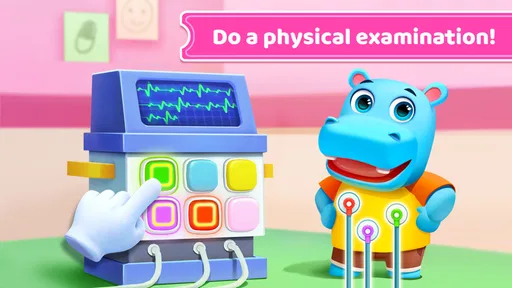
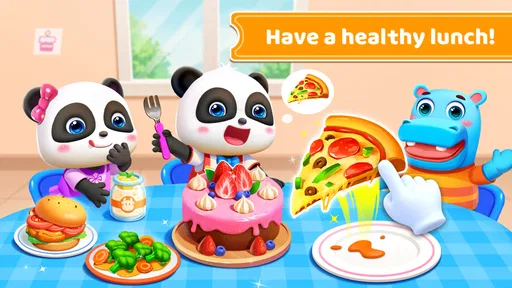
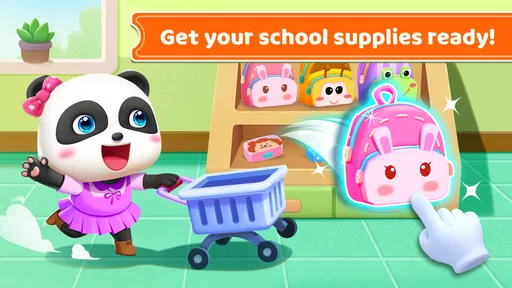
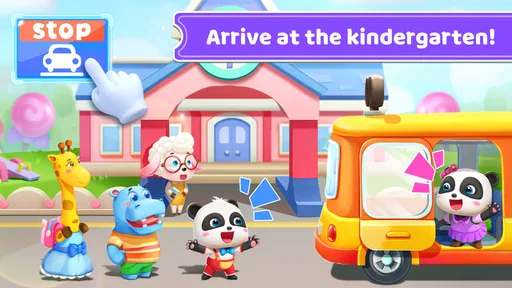
Our Review of Baby Panda's School Bus
 Analysis by Appyee
When I think of a first driving game for a young child, I look for something that gives them a clear role without making every moment feel like a test. Baby Panda's School Bus puts the child in charge of a bus journey with animal passengers, then mixes that simple premise with small learning activities. I find that combination appealing for a short, shared play session: a child can enjoy pretending to drive while an adult has natural openings to talk about road signs, caring for passengers, and looking after a vehicle.
This is an educational game from BabyBus, free to download, with a Everyone age rating. It has a 4.5 average from around 307,000 ratings, and it has passed 100 million installs. Those figures suggest broad appeal, but they do not tell me whether it will suit every child; the more useful question is whether its bus theme and gentle learning activities match the kind of play your family wants.
What the purchase setup means for a family
The starting price is free, but optional in-app purchases range from $1.49 to $29.99 per item. I would treat that as a reason to set expectations before handing over a device, rather than as a reason to rule the game out. A child may see something they want to unlock, so it is sensible to review purchase settings together and make clear that free play is the default unless an adult decides otherwise.
The game’s current version is 8.73.16.12 and it requires Android 6.0 or later. That gives Android households a practical compatibility check before downloading. I would also try it on the device the child will actually use, since a game that feels comfortable on a larger screen may be less convenient on a small phone in little hands.
Getting on Board with Baby Panda
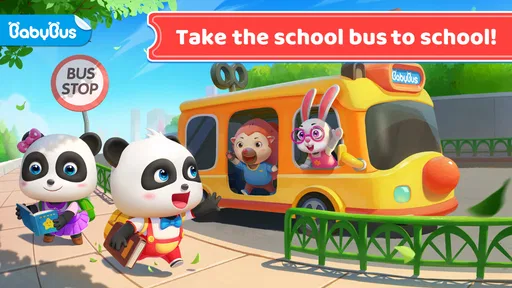
First things first, downloading Baby Panda's School Bus was a breeze. It’s available on both Android and iOS, and the installation process was as smooth as a baby’s bottom. As soon as I opened the app, I was greeted with vibrant colors and a cheerful theme song that instantly grabbed my attention. Baby Panda, the main character, is ready to embark on a school bus journey with a bunch of animal friends, and guess what? You’re the driver!
Interactive Gameplay
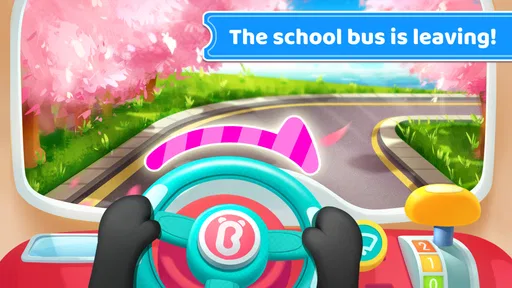
The app does an excellent job of making learning interactive. Kids get to control the school bus, picking up friends along the way, and ensuring everyone gets to school safely. The controls are intuitive, with simple swipe and tap gestures, making it easy for little fingers to navigate. What I loved most is how educational elements are seamlessly integrated into the gameplay.
For instance, at each stop, kids learn about traffic lights, road signs, and basic driving rules. It’s a fun way to introduce them to concepts of road safety without making it feel like a lesson. Plus, there are mini-games scattered throughout the journey that add variety and keep the engagement levels high.
Thinking beyond the driving screen
A useful way to play is to let the child take the lead, then pause to ask one specific question at a stop: what did the light mean, which sign was easy to spot, or why should passengers be taken along carefully? I would keep these conversations short. The point is not to turn a cartoon ride into a road-safety lecture, but to help a child connect an on-screen choice with something they may notice as a passenger in a real car.
That distinction matters: this is a playful introduction, not driving instruction. Young children can repeat a simple idea in the game without yet understanding how it applies in busy streets, so I would use it as a prompt for conversation rather than a substitute for an adult explaining safe behavior outdoors.
Fun and Learning Combined
What sets Baby Panda's School Bus apart is its ability to blend fun with learning. The app features a wide array of mini-games that are not only entertaining but also educational. From matching shapes and colors to solving simple puzzles, each game is designed to stimulate a child’s cognitive development.
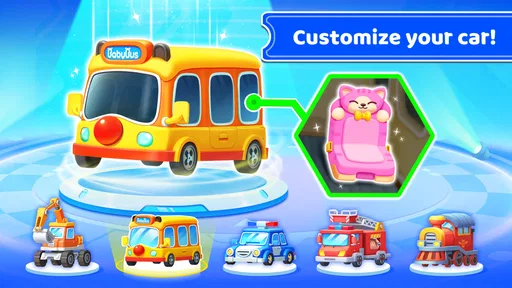
One of my personal favorites was the "Bus Cleaning" mini-game. Kids get to wash and repair the bus, learning about cleanliness and maintenance. It’s a great way to teach responsibility, and I noticed how my young niece took it quite seriously, ensuring every spot was squeaky clean!
Using the activities with different moods
The mix of a route, short puzzles, and bus care gives an adult a few ways to respond to a child’s attention span. If they are eager to play pretend, focus on passenger pick-ups and the journey. If they are in the mood to concentrate, matching and puzzle activities offer a different kind of task. When they want something calmer, cleaning the bus can feel more deliberate than steering through a route.
I would not assume every child will enjoy all of those activities equally. A child who wants an open-ended driving sandbox may find the guided stops and mini-games restrictive; one who prefers letters, numbers, or structured lessons may want a more focused learning app. The strength here is variety within a bus theme, not deep instruction in any single school subject.
Graphics and Sound
Let’s talk about the visuals—because they’re fantastic! The graphics are bright, colorful, and very appealing to young eyes. The characters are adorable, and the animations are smooth, making the whole experience feel like you’re part of a cute cartoon world. The sound effects and background music are equally delightful, adding to the overall enjoyment without becoming overwhelming or distracting.
A small-screen routine that works
For an everyday use case, I can picture this fitting into a quiet stretch at home while a parent prepares dinner: the child plays a short bus run nearby, and the adult can check in between tasks rather than needing to invent a lesson. It could also be a handy option during a wait, provided the device is already set up and the child is comfortable with the controls. I would avoid relying on it as a guaranteed way to settle every restless moment; a child who is tired or frustrated may not want to follow the game’s prompts.
Because the experience includes music and sound effects, I would check the volume before passing the device over in a quiet room. The cheerful audio is part of the cartoon feel, but families who prefer silent play may want to turn the device volume down. That small adjustment can make it easier to use without making the game’s bright presentation the center of the room.
Parental Control and Safety
In today’s digital age, parental control is a big plus, and Baby Panda's School Bus doesn’t disappoint. The app includes a parent’s section where you can monitor the time your child spends on the app and manage in-app purchases. It’s reassuring to know that the app prioritizes safety, allowing children to explore in a secure environment.
Progress without pressure
The appeal of this kind of game is that a child can engage with familiar actions—driving, stopping, picking up friends, and caring for a bus—without needing to compete against another player. I see that as a better fit for preschool-style casual play than games built around leaderboards, timed challenges, or winning against opponents. It gives an adult room to encourage trying again without turning a mistake into a loss.
At the same time, I would not equate gentle play with guaranteed progress. A child might spend most of a session enjoying the characters and sounds, and that is still play; the educational value depends partly on how they engage and whether an adult helps connect the activities to everyday ideas. If your main goal is a measurable curriculum or sustained practice in one skill, a dedicated learning app is likely a better match.
Fairness, spending, and what to check
There is no competitive advantage to buy in the usual player-versus-player sense in the experience described here. The practical fairness question is instead whether optional purchases create pressure in your household. Since items have a broad price range, I would keep purchase approval with an adult and avoid presenting paid content as a reward the child can demand after every session. That keeps the game’s free starting point clear and prevents a casual play routine from turning into repeated negotiations.
Before a child plays independently, I would open the parent area with them out of reach and check the purchase controls you intend to use. A parent can also decide in advance whether the game is for occasional waiting-room play or a regular short activity. A simple household rule—such as asking before any purchase—does more to avoid surprises than trying to explain an unfamiliar checkout prompt in the middle of play.
A Few Bumps on the Road
Of course, no app is perfect. While the overall experience was positive, there were a few hiccups. Occasionally, the app would stall, especially on older devices. A quick restart usually fixed the issue, but it’s something to keep in mind if your device isn’t the latest model. Additionally, while the app is free, there are in-app purchases to unlock more content, which might not sit well with everyone.
How it compares with other children’s games
Compared with a basic coloring app, this offers more pretend-play structure: the child has a role as the bus driver and can move between a journey and related activities. Compared with a narrowly focused road-sign or puzzle app, it is less like a lesson workbook and more like a cartoon play space that introduces several ideas lightly. That makes it a reasonable choice when a child is drawn to buses and characters, but not necessarily the strongest pick for a parent seeking a particular academic outcome.
It is also a different choice from open-ended driving games. Here, the school-bus setting and passenger routine give the activity a clear direction, which can help a younger child understand what to do next. The trade-off is less freedom for children who want to roam or make up their own rules. I would choose it for themed, guided play, and choose a sandbox-style game when independent exploration is the priority.
Who I would hand it to
I would consider it for a young child who likes vehicles, animal characters, simple touch interactions, and short changes of activity. It may also work well for an adult who wants a game that offers easy conversation starters rather than a screen experience that demands constant explanation. The Everyone rating makes its broad audience clear, but a rating does not tell you whether the pace, sounds, or activities are a personal fit for your child; trying a brief session together is the sensible test.
I would skip it if the child is looking for a quiet, text-heavy educational tool, if you want a game with no optional spending at all, or if your device has trouble running it smoothly. I would also choose something else for an older child who expects complex vehicle controls or a competitive challenge. The bus theme is its appeal, but that focus can also limit how long it holds attention once the child has had enough of the characters and routine.
Despite these minor issues, the app remains a fantastic choice for young children. It’s engaging, educational, and most importantly, fun. Plus, it’s a great way for kids to learn about the world around them from the comfort of their school bus adventure.
What I would want to know before installing
Is it free to try? Yes, there is no upfront price, though optional in-app purchases are available. Is it suitable for a child without an adult nearby? The parent section and Everyone age rating are reassuring, but I would still set purchase expectations and check the device controls first. Does it teach road safety? It introduces familiar signs and rules through play, but I would not treat it as formal instruction. Will it suit every child? No: a bus-loving child may be captivated, while someone who prefers open-ended play or focused lessons may do better elsewhere.
For Android users, the minimum operating-system requirement is Android 6.0; the game is also available on iOS. I would check that the device is supported, keep the app updated through the usual store process, and test it briefly before making it part of a daily routine. These are practical steps, especially if the child will use an older phone or tablet rather than the adult’s newer device.
My trust verdict
For me, trust here means being clear-eyed about what the game offers: a cheerful school-bus setting, simple interactive play, and educational themes presented in a light way, alongside optional purchases and the possibility of performance hiccups on older devices. BabyBus has made a free entry point that can be enjoyable when the child likes the subject and an adult sets sensible boundaries around spending and screen time.
In conclusion, Baby Panda's School Bus is a delightful app that I’d highly recommend to any parent looking for a wholesome and educational app for their child. It’s a wonderful way to introduce little ones to the concept of road safety and responsibility while keeping them entertained for hours. So, if you’re on the lookout for an app that offers a perfect blend of fun and learning, give Baby Panda’s School Bus a try. It might just become a favorite in your household!
Privacy and Permissions
See what permissions an app requests and how it handles your data.
- Wi-Fi connection information
- view Wi-Fi connections
- Other
- view network connections, full network access, change your audio settings, control vibration, prevent device from sleeping
Verdict
Strengths of Baby Panda's School Bus
- Engaging and colorful graphics.
- Simple controls for young children.
- Educational content included.
- Encourages imaginative play.
- Frequent updates with new features.
Limitations of Baby Panda's School Bus
- Can become repetitive over time.
- Contains in-app purchases.
- Limited language options.
- Some ads can be distracting.
- Requires internet for full features.
Other Releases by BabyBus
View All
Little Panda Policeman
Educational4.0

Little Panda's Chinese Recipes
Educational4.4

Little Panda's Restaurant
Educational4.4

Little Panda's Ice Cream Games
Educational4.3
Similar Picks in This Category
View AllLittle Panda Policeman
BabyBus4.0

Monster Trucks Game for Kids 2
Raz Games4.1
Little Panda's Chinese Recipes
BabyBus4.4
Little Panda's Restaurant
BabyBus4.4
Little Panda's Ice Cream Games
BabyBus4.3

Baby Panda Care
BabyBus3.8
You May Also Like
View All
Frequently Asked Questions
What is the main objective of Baby Panda's School Bus?
Baby Panda's School Bus is designed to provide children with an engaging and educational experience. The game focuses on teaching kids about road safety, basic math, and problem-solving skills. Through interactive gameplay, children can learn how to manage a school bus, including picking up students and ensuring a safe and timely journey.
Is Baby Panda's School Bus suitable for all age groups?
The game is primarily designed for young children, typically ranging from 3 to 6 years old. Its colorful graphics, simple controls, and educational content make it ideal for preschoolers. However, older children may also enjoy the interactive elements and learning aspects, though they might find the challenges less stimulating.
Does Baby Panda's School Bus require an internet connection?
No, Baby Panda's School Bus does not require an internet connection to play. This makes it convenient for children to enjoy while on the go, without needing Wi-Fi or data. However, an internet connection may be necessary for downloading updates or accessing additional content that might enhance the gameplay experience.
Are there in-app purchases or ads in Baby Panda's School Bus?
Yes, Baby Panda's School Bus includes in-app purchases and ads. While the core game is free, certain features or items may require purchases to unlock. Additionally, ads may appear during gameplay, which is something parents should consider if they prefer an ad-free experience for their children.
How can parents ensure a safe experience for their children?
To ensure a safe experience, parents are encouraged to monitor gameplay and make use of parental controls on their devices. This can help manage in-app purchases and limit exposure to ads. Additionally, playing together can be a great way to discuss road safety and reinforce the educational lessons presented in the game.
Play our best games!


